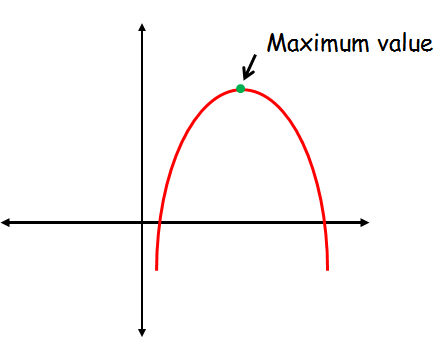
Maximum Stress Formula with Numerical Examples
Ever wondered how engineers ensure a bridge can withstand rush hour traffic or an airplane wing can handle turbulence? It all boils down to understanding stress – specifically, the maximum stress a material can endure before it fails. The maximum stress formula is a cornerstone of mechanical engineering, material science, and structural design, crucial for predicting material behavior under load and preventing catastrophic failures. This article breaks down the formula, its applications, and provides practical examples to solidify your understanding.
Understanding Stress and its Significance
Stress, in engineering terms, is the force acting on a material's cross-sectional area. Imagine pulling on a rubber band. The force you apply is distributed across the rubber band's width and thickness. That internal resistance within the rubber band is stress. Understanding the different types of stress—tensile (pulling), compressive (pushing), and shear (sliding)—is fundamental for failure analysis and ensuring the safety and reliability of structures and components.
Why is understanding stress so important? Because exceeding a material's maximum stress limit leads to deformation or even fracture. Think of a paperclip bent back and forth repeatedly. Eventually, it breaks. That's because the stress applied exceeded the material's capacity. Therefore, engineers meticulously calculate maximum stress to design safe and durable products.
The Maximum Stress Formula: Explained
The specific formula for maximum stress varies depending on the type of stress and the geometry of the object. Let's look at the most common type: normal stress (tensile or compressive) in a simple bar under axial load.
The formula is:
σmax = F / A
Where:
σmax represents the maximum normal stress (usually measured in Pascals (Pa) or pounds per square inch (psi)).
F is the applied force (measured in Newtons (N) or pounds (lb)).
A is the cross-sectional area perpendicular to the force (measured in square meters (m2) or square inches (in2)).
This formula applies when the force is uniformly distributed across the area. For more complex geometries or loading conditions, the formula becomes more complex and may involve stress concentration factors.
Stress Concentration Factors
Stress concentration factors (K) account for localized increases in stress around geometric discontinuities like holes, notches, or sharp corners. The actual maximum stress is then:
σmax = K (F / A)
Determining the appropriate K value often involves using charts, tables, or finite element analysis (FEA) software.
Numerical Examples: Putting the Formula to Work
Let's solidify your understanding with a couple of practical examples.
Example 1: Tensile Stress in a Steel Rod
A steel rod with a diameter of 10 mm is subjected to a tensile force of 5000 N. Calculate the maximum tensile stress in the rod.
1.Calculate the cross-sectional area:
A = π (d/2)2 = π (0.01 m / 2)2 ≈
7.85 x 10⁻⁵ m2
2.Apply the maximum stress formula:
σmax = F / A = 5000 N / (7.85 x 10⁻⁵ m2) ≈
63.69 x 10⁶ Pa =
63.69 MPa
Therefore, the maximum tensile stress in the steel rod is approximately 63.69 MPa.
Example 2: Compressive Stress in a Concrete Column
A square concrete column with sides of 0.3 meters is subjected to a compressive load of 200,000 N. Calculate the maximum compressive stress in the column.
1.Calculate the cross-sectional area:
A = side side = 0.3 m
0.3 m =
0.09 m2
2.Apply the maximum stress formula:
σmax = F / A = 200,000 N / 0.09 m2 ≈
2.22 x 10⁶ Pa =
2.22 MPa
Therefore, the maximum compressive stress in the concrete column is approximately 2.22 MPa.
Practical Applications of the Maximum Stress Formula
The maximum stress formula isn't just theoretical. It's used in numerous real-world applications:
Structural Engineering: Designing bridges, buildings, and other structures to withstand loads and environmental conditions. Aerospace Engineering: Ensuring the structural integrity of aircraft components, such as wings and fuselage. Mechanical Engineering: Designing machine parts, pressure vessels, and other components that experience stress. Automotive Engineering: Analyzing the stress on chassis, suspension components, and engine parts.
Advantages and Limitations
The maximum stress formula provides a simple and effective way to estimate stress levels in materials. It's easy to apply and understand, making it a valuable tool for preliminary design and analysis.
However, it has limitations. It assumes a uniform stress distribution and doesn't account for complex geometries, stress concentrations, or dynamic loading conditions. For more accurate results, more advanced techniques like finite element analysis are often required.
Conclusion
Understanding the maximum stress formula is crucial for anyone involved in engineering design. It provides a fundamental understanding of how materials behave under load and helps prevent failures. By mastering this formula and its applications, you'll be well-equipped to create safe, reliable, and durable designs. Keep practicing with numerical examples, and you'll be well on your way to becoming a stress analysis expert!
Frequently Asked Questions
What are the units of maximum stress?
The units of maximum stress are typically Pascals (Pa) or Megapascals (MPa) in the metric system, and pounds per square inch (psi) in the imperial system.
How does temperature affect maximum stress?
Temperature can significantly affect a material's strength and, therefore, its ability to withstand stress. Generally, higher temperatures decrease a material's yield strength and ultimate tensile strength, making it more susceptible to failure under stress.
What is the difference between stress and strain?
Stress is the force per unit area within a material caused by external loads, while strain is the deformation of the material caused by that stress. Strain is a dimensionless quantity, often expressed as a percentage.
What is yield strength? How is it related to maximum stress?
Yield strength is the amount of stress a material can withstand before it begins to deform permanently (plastically). While maximum stress (specifically, ultimate tensile strength) is the maximum stress a material can withstand before it breaks. Yield strength is typically lower than ultimate tensile strength. For design purposes, staying below the yield strength is often the primary goal.
When should I use FEA instead of the simple maximum stress formula?
You should use FEA when dealing with complex geometries, non-uniform loading conditions, stress concentrations, or when a higher level of accuracy is required. The simple formula is best for preliminary estimates and simple scenarios.
What is "factor of safety" and how does it relate to maximum stress?
Factor of safety (FOS) is a design criterion that ensures a structure can withstand loads beyond what it's expected to experience. It's calculated by dividing the material's strength (like yield strength or ultimate tensile strength) by the maximum stress expected in the structure. A higher FOS indicates a more robust design.
Posting Komentar untuk "Maximum Stress Formula with Numerical Examples"