Applications of Maximum Stress Formula in Civil Engineering
Ever driven across a bridge and wondered how engineers ensure it won't collapse under the weight of traffic, wind, and its own immense structure? The secret lies, in part, with understanding and applying the maximum stress formula. This formula is a cornerstone of civil engineering, helping us design structures that can withstand the forces acting upon them, ensuring safety and longevity. Let's dive into how this crucial formula is used in the real world.
Understanding the Maximum Stress Formula
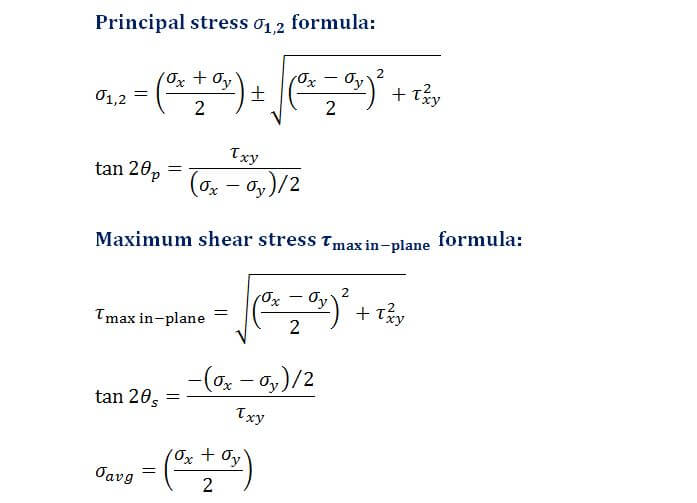
At its core, the maximum stress formula helps us determine the highest amount of stress a material within a structure will experience. Stress, in this context, is the force acting over a unit area. Understanding this maximum stress is vital for preventing structural failures. The formula varies depending on the type of stress (tensile, compressive, shear, etc.) and the geometry of the structural element.
Different materials have different stress limits. A steel beam can withstand much higher stress than a wooden one. Civil engineers use the maximum stress formula along with knowledge of material properties to ensure that the calculated maximum stress remains well below the material's yield strength (the point at which permanent deformation occurs) and ultimate tensile strength (the point at which failure occurs).
Common Stress Types and Formulas
Several types of stress are critical in civil engineering design, each with its own formula for calculating the maximum value:
Tensile Stress (σt): This is the stress experienced when a material is pulled apart. The formula is σt = F/A, where F is the tensile force and A is the cross-sectional area. Compressive Stress (σc): This occurs when a material is squeezed or compressed. The formula is similar to tensile stress: σc = F/A, where F is the compressive force. Shear Stress (τ): This is the stress experienced when a material is subjected to forces acting parallel to a surface. A common formula is τ = V/A, where V is the shear force and A is the area resisting the shear. Bending Stress (σb): This is important for beams and other structural elements subjected to bending moments. A common formula for calculating bending stress is σb = My/I, where M is the bending moment, y is the distance from the neutral axis, and I is the area moment of inertia.
These formulas are simplified representations, and more complex scenarios might require finite element analysis or other advanced techniques.
Applications in Bridge Design
Bridge design is a prime example of how the maximum stress formula is used in civil engineering. Engineers must consider various loads, including the weight of the bridge itself (dead load), the weight of vehicles (live load), wind loads, seismic loads, and temperature variations.
By carefully analyzing these loads, engineers can determine the maximum tensile and compressive stresses in different parts of the bridge structure, such as the beams, columns, and cables. They then select materials and design the dimensions of these components to ensure that the maximum stresses remain within acceptable limits. For instance, cable-stayed bridges rely heavily on understanding tensile stress limits in the cables to ensure they can support the deck.
Finite element analysis (FEA) is often used to model complex bridge designs and predict stress distributions under various loading conditions. FEA software allows engineers to identify stress concentrations and optimize the design to minimize the risk of failure.
Applications in Building Design
Similar to bridge design, the maximum stress formula plays a critical role in building design. Buildings must withstand a variety of loads, including dead loads (weight of the building materials), live loads (occupants, furniture, etc.), wind loads, and seismic loads.
Engineers use the maximum stress formula to design structural elements such as beams, columns, and foundations. They ensure that these elements can safely carry the applied loads without exceeding the allowable stress limits of the materials used. For example, when designing a high-rise building, engineers must consider the compressive stress in the columns due to the weight of the entire structure.
Consideration is also given to the connections between different structural elements. These connections are often points of high stress concentration, and engineers must carefully design them to prevent failure. Material selection also is crucial to manage tensile and compressive stress efficiently. Proper design and execution significantly improves material strength.
Applications in Tunnel Design
Tunnel design presents unique challenges because of the surrounding soil and rock pressure. Civil engineers use the maximum stress formula to analyze the stresses acting on the tunnel lining and ensure its stability. They consider factors such as the depth of the tunnel, the properties of the surrounding soil or rock, and the groundwater pressure.
The tunnel lining is designed to withstand the compressive stresses from the surrounding ground. Engineers may also need to consider tensile stresses if the tunnel is subjected to bending moments or other external forces. Proper design of the tunnel lining is crucial to prevent collapse and ensure the safety of workers and users.
Geotechnical investigations play a crucial role in tunnel design. These investigations provide information about the properties of the surrounding soil and rock, which is essential for accurately calculating the stresses acting on the tunnel lining.
Pros and Cons of Using the Maximum Stress Formula
Like any engineering tool, the maximum stress formula has its strengths and weaknesses:
Pros:
Simplicity: The formula is relatively straightforward to apply, making it a valuable tool for preliminary design and analysis. Safety: It helps engineers ensure the safety of structures by preventing them from exceeding the material's allowable stress limits. Cost-effectiveness:By optimizing the use of materials, the formula can help reduce the cost of construction.
Cons:
Simplifications: The formula relies on certain assumptions and simplifications, which may not always be valid in complex real-world scenarios. Stress Concentrations: It may not accurately capture stress concentrations at points of geometric discontinuity, such as corners or holes. Material Behavior:It assumes linear elastic material behavior, which may not be accurate for all materials or under all loading conditions.
Conclusion
The maximum stress formula is a fundamental tool in civil engineering, empowering engineers to design safe and durable structures. From bridges to buildings to tunnels, this formula helps us understand and manage the stresses that materials experience under various loads. By applying this knowledge, we can build infrastructure that stands the test of time. Keep learning, keep building, and always remember the importance of understanding stress!
Frequently Asked Questions
What is the difference between stress and strain?
Stress is the force acting over a unit area within a material, while strain is the deformation of the material caused by that stress. Stress is the cause, and strain is the effect.
How does the factor of safety relate to the maximum stress formula?
The factor of safety is a multiplier applied to the calculated maximum stress to ensure that the actual stress remains well below the material's yield strength or ultimate tensile strength. It provides a buffer against uncertainties and variations in material properties and loading conditions.
What is finite element analysis (FEA), and how does it relate to the maximum stress formula?
Finite element analysis (FEA) is a computer-based method for analyzing complex structures and predicting stress distributions under various loading conditions. It can be used to validate the results obtained from the maximum stress formula and to identify stress concentrations that may not be captured by simpler methods.
What are some common mistakes to avoid when using the maximum stress formula?
Common mistakes include using incorrect units, neglecting stress concentrations, and assuming linear elastic material behavior when it is not valid. It is important to carefully consider the assumptions and limitations of the formula and to use appropriate methods for analyzing complex scenarios.
Can the maximum stress formula be used for dynamic loads?
Yes, but with caution. For dynamic loads (loads that vary with time), it is important to consider the effects of inertia and damping. The maximum stress formula can still be used as a starting point, but it may need to be modified to account for these dynamic effects.
How does temperature affect the maximum stress in a material?
Temperature can significantly affect the maximum stress in a material. Changes in temperature can cause thermal expansion or contraction, which can induce stresses in the material. Additionally, the material's strength and stiffness may vary with temperature, affecting its ability to withstand stress. Civil engineers must account for these thermal effects in their designs.
Posting Komentar untuk "Applications of Maximum Stress Formula in Civil Engineering"