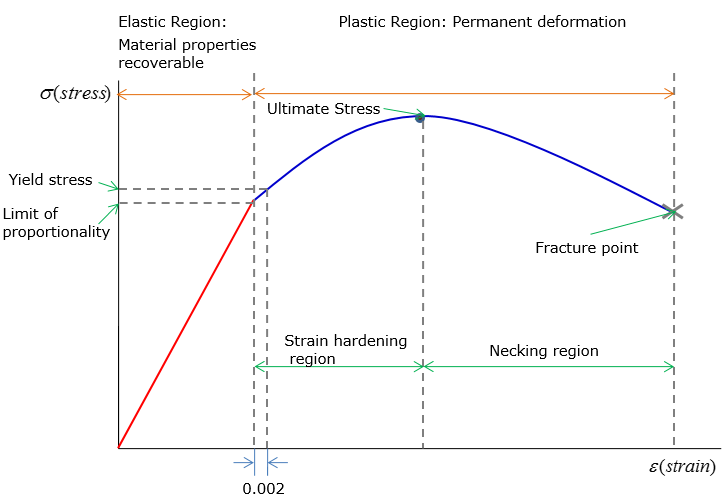
Derivation of Centrifugal Stress Formula in Solid Mechanics
Ever wondered how a spinning flywheel manages to hold itself together at high speeds? Or how engineers calculate the forces acting on a turbine blade in a jet engine? Understanding centrifugal stress is absolutely crucial in these, and many other, mechanical engineering applications. It's a key factor in ensuring the safety and reliability of rotating machinery, preventing catastrophic failures. Mastering the derivation of the centrifugal stress formula allows engineers, students, and professionals to confidently analyze and design components that can withstand these demanding forces.
Understanding Centrifugal Force and Stress
Centrifugal force is the apparent outward force experienced by an object moving in a circular path. It's not a "real" force in the Newtonian sense, but rather an inertial force that arises from the object's tendency to continue moving in a straight line. This perceived force causes stress within the rotating object, attempting to pull it apart. Let's delve into how this force translates into stress within a solid body.
Think about a spinning disc. Each tiny element of that disc is being pulled outwards due to its inertia. This outward pull is resisted by the cohesive forces within the material of the disc, creating internal stresses. These stresses, which vary depending on the location within the disc, are what we define as centrifugal stress. Understanding these stresses is crucial for structural design and failure analysis.
Definitions and Key Concepts
Before diving into the derivation, let's define some key terms:
- Centrifugal Force (Fc): The apparent outward force on a rotating object.
- Centrifugal Stress (σc): The internal stress within a rotating object caused by centrifugal force.
- Angular Velocity (ω): The rate of rotation, typically measured in radians per second (rad/s).
- Radius (r): The distance from the center of rotation to a point within the object.
- Density (ρ): The mass per unit volume of the material.
Derivation of the Centrifugal Stress Formula
The derivation involves considering a small element within the rotating object and analyzing the forces acting upon it. We'll focus on the common case of a thin rotating disc with uniform thickness.
Imagine a thin ring within the disc at a radius 'r' with a thickness 'dr'. The centrifugal force acting on this ring can be calculated, and then related to the stress within the disc.
Step-by-Step Derivation
1. Calculate the mass (dm) of the ring element:
dm = ρ Volume = ρ (2πr dr t), where 't' is the thickness of the disc.
2. Calculate the centrifugal force (d Fc) acting on the ring element:
d Fc = dm ac = dm ω2r = ρ (2πr dr t) ω2r = 2πρtω2r2dr
3. Consider the equilibrium of the ring:
The centrifugal force d Fc is balanced by the tensile force acting on the cross-sectional area of the ring. Let σr be the radial stress at radius 'r', and σr + dσr be the radial stress at radius 'r + dr'.
4. Force Balance Equation:
2 σr t = d Fc
2 σr t = 2πρtω2r2dr
5. Simplify and integrate:
After simplification and integration with appropriate boundary conditions (e.g., stress-free outer edge), we arrive at the general formula for radial stress (σr) and tangential stress (σt) in a rotating disc:
σr = (3 + ν) / 8 ρω2 (R2 - r2)
σt = (3 + ν) / 8 ρω2 (R2 - ((1 + 3ν) / (3 + ν)) r2)
Where:
- ν is Poisson's ratio of the material.
- R is the outer radius of the disc.
- r is the radial distance from the center.
Practical Considerations
These formulas are simplified models. In real-world applications, factors like stress concentrations, temperature gradients, and material anisotropy can significantly influence the stress distribution. Finite Element Analysis (FEA) is often used for more complex geometries and loading conditions to provide a more accurate stress analysis.
Applications and Examples
Centrifugal stress calculations are essential in numerous engineering applications. Here are a few examples:
- Turbine Blades: Designing turbine blades in jet engines and power plants requires precise calculation of centrifugal stresses to prevent failure at high rotational speeds.
- Flywheels: Flywheels used for energy storage experience significant centrifugal stresses. Accurate calculations are crucial for safe operation.
- Rotating Discs in Machinery: Many machines utilize rotating discs. Ensuring these discs can withstand the centrifugal forces is paramount for reliability.
- Clutches and Brakes: The rotating components of clutches and brakes are subject to centrifugal forces and stresses.
Case Study: Design of a Flywheel
Imagine you're designing a flywheel for a hybrid vehicle. You need to determine the maximum rotational speed the flywheel can handle before exceeding the material's tensile strength. By using the centrifugal stress formula, and considering the material properties (density, tensile strength, Poisson's ratio), you can calculate the allowable angular velocity. This ensures the flywheel operates safely within its design limits.
Pros and Cons of Using the Centrifugal Stress Formula
Pros:
- Simplicity: The formulas are relatively simple to apply for basic geometries like thin discs.
- Insight: Provides a good understanding of how centrifugal stress varies within a rotating object.
- Preliminary Design: Useful for initial design calculations and feasibility studies.
Cons:
- Simplifications: The formulas rely on simplifying assumptions (e.g., uniform thickness, isotropic material).
- Limited Geometry: Not applicable to complex geometries or non-uniform loading conditions.
- Ignores Stress Concentrations: Does not account for stress concentrations at holes or sharp corners.
Frequently Asked Questions
What is the difference between centrifugal force and centripetal force?
Centrifugal force is the apparent outward force experienced by an object in a rotating frame of reference, while centripetal force is the real force that causes an object to move in a circular path. They are equal in magnitude but opposite in direction.
How does Poisson's ratio affect centrifugal stress?
Poisson's ratio (ν) represents the ratio of transverse strain to axial strain. It affects the tangential stress component in the rotating disc. A higher Poisson's ratio generally leads to higher tangential stress.
What are the limitations of the thin disc assumption?
The thin disc assumption simplifies the stress analysis by assuming that the stress is uniform through the thickness of the disc. This assumption is valid when the thickness is small compared to the radius. For thicker discs, more complex stress distributions need to be considered.
How can FEA be used to analyze centrifugal stress?
Finite Element Analysis (FEA) is a numerical method that can be used to analyze complex geometries and loading conditions. In the context of centrifugal stress, FEA allows you to model the rotating object with greater accuracy, including stress concentrations, material anisotropy, and temperature gradients, providing a more reliable stress distribution.
What is the maximum stress location in a rotating disc?
For a solid rotating disc, the maximum radial stress occurs at the center of the disc (r=0). The maximum tangential stress also occurs at the center, but its magnitude is higher than the radial stress at that point.
What are the units for centrifugal stress?
Centrifugal stress is a type of stress, so its units are the same as pressure: Pascals (Pa) in the SI system, or pounds per square inch (psi) in the imperial system.
Conclusion
Understanding the derivation and application of the centrifugal stress formula is fundamental for anyone involved in the design and analysis of rotating machinery. While simplified formulas offer a valuable starting point, remember to consider their limitations and utilize more advanced tools like FEA for complex scenarios. By mastering these concepts, you can ensure the safety, reliability, and longevity of rotating components, contributing to more efficient and robust engineering designs. Keep exploring, keep learning, and keep innovating!
Posting Komentar untuk "Derivation of Centrifugal Stress Formula in Solid Mechanics"