Max Stress Formula Explained with Solved Examples
Ever wondered how engineers ensure bridges don't collapse or airplane wings don't snap mid-flight? It boils down to understanding stress – specifically, the maximum stress a material can handle before it fails. This is crucial in mechanical engineering, structural design, and any field dealing with load-bearing structures. Ignoring the max stress formula can lead to catastrophic failures, making it a fundamental concept for students and professionals alike. Let’s dive in and unlock the secrets of calculating and applying this vital formula.
Understanding Stress: The Foundation
Stress, in the context of material science, is the force acting on a material's cross-sectional area. It's essentially the internal resistance a material offers to external forces trying to deform it. Think of it as the material's "pushback" against being stretched, compressed, or twisted.
There are two main types of stress: normal stress (tensile and compressive) and shear stress. Tensile stress occurs when a material is pulled, while compressive stress occurs when a material is squeezed. Shear stress, on the other hand, arises from forces acting parallel to the material's surface, like when you try to cut something with scissors.
The formula for stress (σ) is simple: σ = F/A, where F is the force applied and A is the cross-sectional area over which the force is distributed. The units are typically Pascals (Pa) or pounds per square inch (psi).
The Max Stress Formula: Identifying Critical Points
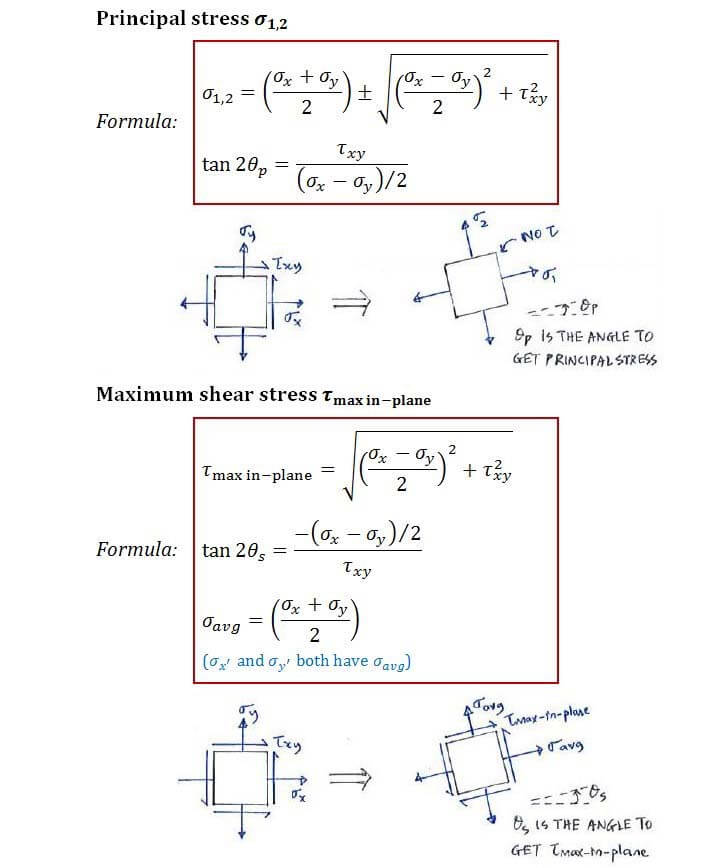
The "Max Stress Formula" isn't a single, universally applicable equation, but rather a concept applied in various contexts. It revolves around identifying the location within a structure experiencing the highest stress value. This location is the most susceptible to failure.
Different loading conditions and geometries will dictate the specific formulas used tofindthe maximum stress. For example, in a simple tensile test, the maximum stress is simply the force divided by the minimum cross-sectional area of the specimen. However, for more complex geometries and loading scenarios, Finite Element Analysis (FEA) or more complex stress equations are needed to pinpoint the location and magnitude of the maximum stress. These might involve considering stress concentrations around holes or corners.
The ultimate goal is to compare the calculated maximum stress to the material's yield strength or ultimate tensile strength (depending on the design criteria). If the maximum stress exceeds these material properties, failure is likely.
Tensile Stress Example
Let's say you have a steel rod with a diameter of 10mm subjected to a tensile force of 5000 N. What is the tensile stress?
First, calculate the cross-sectional area: A = πr2 = π(0.005 m)2 ≈
7.85 x 10⁻⁵ m2.
Then, calculate the tensile stress: σ = F/A = 5000 N / 7.85 x 10⁻⁵ m2 ≈
63.66 MPa.
Bending Stress Example
Consider a cantilever beam with a rectangular cross-section, subjected to a point load at its free end. The maximum bending stress occurs at the fixed end of the beam, at the top and bottom surfaces. The formula for maximum bending stress (σmax) is: σmax = (Mc)/I
Where: M is the maximum bending moment, c is the distance from the neutral axis to the outermost fiber (half the height of the beam), and I is the area moment of inertia of the beam's cross-section.
Suppose the beam is 1 meter long, the point load is 100 N, the beam's height is 0.05 meters, its width is
0.02 meters, and therefore, the maximum bending moment is 100 Nm. The distancecis
0.025 m. The area moment of inertia for a rectangular section is (bh3)/12 = (0.02
0.053)/12 =
2.083 x 10⁻⁷ m4
Therefore, σmax = (100 Nm 0.025 m) /
2.083 x 10⁻⁷ m4 ≈ 12 MPa
Factors Affecting Max Stress
Several factors can influence the maximum stress experienced by a component. These include:
- Geometry: Sharp corners and holes act as stress concentrators, significantly increasing stress levels.
- Loading Conditions: The type of load (tensile, compressive, shear, bending, torsional) and its magnitude directly affect stress.
- Material Properties: The material's elasticity, yield strength, and ultimate tensile strength determine how it responds to stress.
- Residual Stresses: Manufacturing processes like welding can introduce residual stresses, which can add to the stress caused by external loads.
Practical Applications and Importance
Understanding and calculating maximum stress is critical in numerous applications, including:
- Structural Design: Ensuring buildings, bridges, and other structures can withstand applied loads without failure.
- Machine Design: Designing machine components that can operate safely and reliably under stress.
- Aerospace Engineering: Calculating stresses in aircraft structures to ensure flight safety.
- Automotive Engineering: Designing vehicle components that can withstand the rigors of daily use.
Failure analysis often hinges on identifying the location of maximum stress and understanding why it exceeded the material's capacity. This knowledge is essential for preventing future failures.
Advantages and Disadvantages of Max Stress Analysis
Advantages:
- Predicts potential failure points in a design.
- Allows for optimization of designs to reduce stress concentrations.
- Ensures structural integrity and safety.
Disadvantages:
- Can be complex for intricate geometries and loading conditions.
- Requires accurate knowledge of material properties.
- May necessitate the use of advanced software (FEA) for complex problems.
FAQs
What is the difference between stress and strain?
Stress is the force per unit area within a material, while strain is the deformation of the material caused by that stress. Stress is the cause, and strain is the effect.
What is a stress concentration factor?
A stress concentration factor (Kt) is a dimensionless factor that indicates how much the stress is amplified at a stress concentration point (like a hole or corner) compared to the nominal stress in the component.
How does temperature affect maximum stress?
Temperature can significantly influence a material's properties, including its yield strength and ultimate tensile strength. Elevated temperatures generally reduce these values, making the material more susceptible to failure under the same stress levels.
What role does Finite Element Analysis (FEA) play in max stress determination?
FEA is a powerful computational tool used to simulate the behavior of structures under various loading conditions. It allows engineers to determine the stress distribution throughout a complex geometry, pinpointing the location and magnitude of the maximum stress with high accuracy.
What is the factor of safety, and how is it related to max stress?
The factor of safety (FOS) is a ratio of a material's strength (yield strength or ultimate tensile strength) to the maximum stress it is expected to experience in service. A higher FOS indicates a more conservative design, providing a greater margin against failure. FOS = Material Strength / Max Stress.
Is maximum stress always at a surface?
While maximum stressoftenoccurs at a surface due to stress concentrations or bending moments, it's not always the case. In some situations, such as internally pressurized vessels or components with complex residual stress distributions, the maximum stress might occur within the interior of the material.
Conclusion
Understanding the max stress formula, or rather, the concept of identifying and calculating maximum stress within a component, is a cornerstone of safe and reliable engineering design. By carefully considering geometry, loading conditions, and material properties, engineers can accurately predict potential failure points and optimize designs to withstand applied loads. Whether you're a student just starting out or a seasoned professional, mastering this concept is essential for creating durable and safe structures and machines. Keep practicing, keep exploring, and you'll be well on your way to designing a safer, stronger future!
Posting Komentar untuk "Max Stress Formula Explained with Solved Examples"